Mostrando entradas con la etiqueta Wall Street. Mostrar todas las entradas

The New York Stock Exchange: An Investor's Blueprint to Understanding Wall Street's Epicenter


Understanding the Epicenter: A Tour of the NYSE

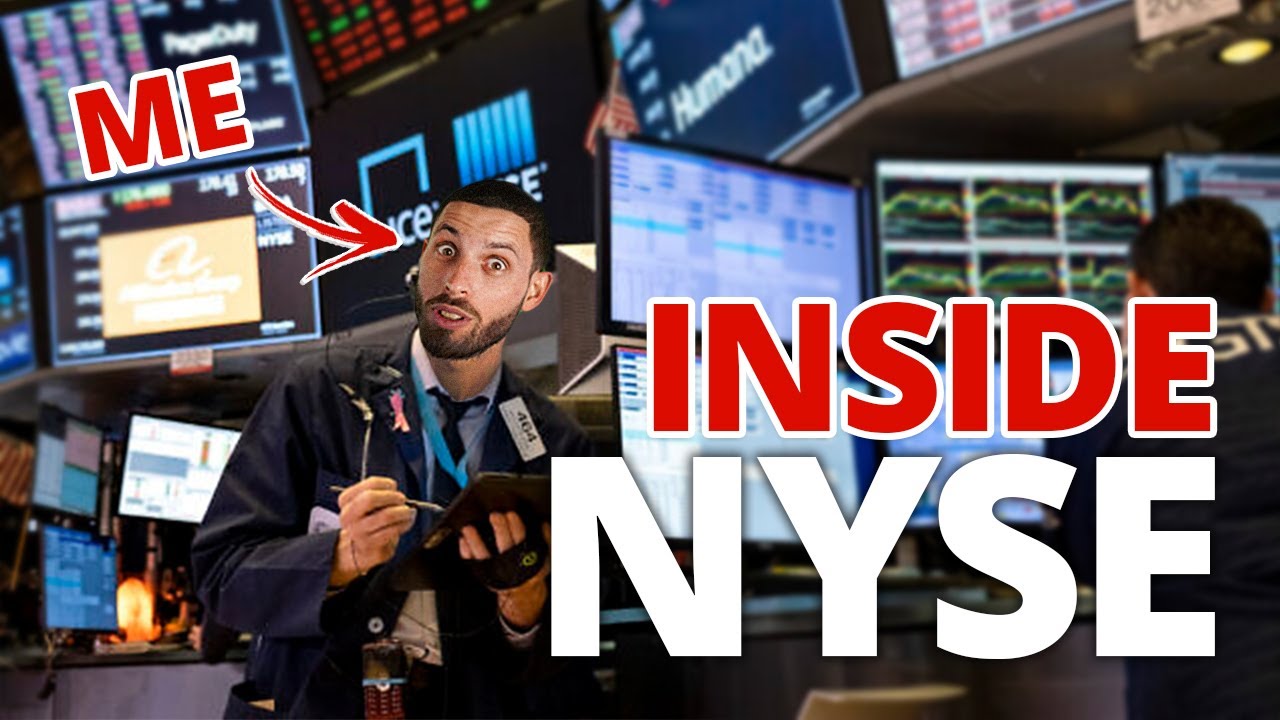
Imagine standing at the very heart of global finance, a place where monumental decisions shape economies and fortunes are forged. The New York Stock Exchange (NYSE) isn't just a building; it's an institution, a symbol of capitalism, and a crucible for investment strategies. This exclusive look inside the NYSE, presented by Benzinga and guided by financial veteran Jay Woods, is more than a virtual tour. It's an investor's primer, a masterclass in appreciating the mechanics that drive markets and create wealth.

For decades, the NYSE has been the stage for some of the most significant financial IPOs and trading activities. Understanding its operations is paramount for anyone serious about maximizing their ROI. This isn't about speculative gambles; it's about grasping the fundamental infrastructure upon which profitable investment decisions are built. Prepare to see Wall Street not just as a street, but as a complex, dynamic ecosystem.

"The New York Stock Exchange is one of the most iconic and historic buildings in New York City. Now it's your chance to see it up close and personal!"

The Role of Jay Woods: From Floor Governor to Market Strategist

Our guide, Jay Woods, is no ordinary observer. His deep-rooted experience, spanning over 25 years as a Designated Market Maker (DMM) on the NYSE floor, provides an unparalleled perspective. As a DMM, he was directly responsible for orchestrating trades in high-profile IPOs and managing some of the most active issues. This hands-on expertise, coupled with his current role as Chief Market Strategist for DriveWealth Institutional, transforms this tour into a strategic asset for your financial education.

Woods' journey from an elected Executive Floor Governor – a position held by only six members – to a leading market strategist, underscores the depth of his understanding of market liquidity, price discovery, and the intricate dance of buyers and sellers. He brings a seasoned trader's eye to the analysis, offering insights that go far beyond the superficial reporting of stock prices. Understanding the roles of figures like Woods is crucial for identifying where true market opportunities lie, differentiating between noise and actionable intelligence. This is the kind of expertise that can significantly boost your investment returns.

His insights are invaluable for anyone looking to improve their asset allocation strategy and navigate the complexities of the financial markets. For those interested in deepening their understanding of trading mechanics, exploring advanced strategies is key. This often involves leveraging platforms that offer sophisticated tools for analysis and execution. Consider how platforms like trading platforms can complement the knowledge gained from market veterans like Woods.

Monetizing the Exchange: Unveiling Market Dynamics and Opportunities

The NYSE is a powerful engine for wealth creation, but its true potential is unlocked by understanding its underlying mechanisms. This tour offers more than just a historical glimpse; it's an investigative deep dive for the discerning investor looking to identify profitable niches and scalable models.

The Architecture of Opportunity: Trading Floors and IPOs

Witnessing the trading floors, the nerve center of the exchange, reveals the pulsating rhythm of capital flow. The process of an Initial Public Offering (IPO), a key driver of growth for both companies and investors, is orchestrated here. Understanding the lifecycle of an IPO, from underwriting to market debut, can be a significant advantage. Many retail investors miss out on early-stage growth because they lack the framework to identify promising IPO candidates. This is where strategic research and understanding market sentiment become critical.

For businesses considering going public, the process is complex and requires robust financial planning. Engaging with financial services and legal experts specializing in corporate finance is often a necessary step. Moreover, understanding the post-IPO performance of companies can provide valuable data for future investment decisions.

Beyond the Bell: Market Makers and Institutional Strategies

The role of Designated Market Makers (DMMs) like Jay Woods highlights the importance of liquidity provision in the market. DMMs ensure that there's always a buyer and a seller, preventing extreme price volatility and facilitating efficient trading. This institutional perspective is vital for understanding how large-cap stocks are managed and how market makers influence price discovery. For the individual investor, this translates into a better grasp of bid-ask spreads, order book dynamics, and the overall health of a security.

Exploring institutional strategies can reveal advanced techniques for portfolio management. Investing in sophisticated financial software, such as advanced analytics platforms or algorithmic trading tools, can provide a competitive edge. Businesses that offer these solutions often target serious investors and institutions, reflecting the high-value nature of this market segment. Exploring the financial software market can reveal tools that mirror the capabilities used by Wall Street professionals.

The Data Advantage: Information as Capital

In the information age, data is capital. The efficiency of the NYSE relies on the rapid dissemination and analysis of market data. Every trade, every announcement, every market fluctuation generates data that can be leveraged for profit. Understanding how this data is processed and utilized by professionals is key to developing your own data-driven investment strategies. This might involve subscribing to premium market data feeds, utilizing specialized charting software, or even developing custom analytical tools.

The ability to process and interpret vast amounts of financial data is a skill that can be monetized in various ways, from active trading to offering analytical services. For instance, becoming proficient in data analysis tools and techniques can open doors to high-paying roles in financial firms or allow you to build a successful freelance career in financial analytics. Learning skills in data science applied to finance is a solid monetizable skill.

Your Action Plan: Mastering Wall Street's Pulse

This glimpse into the NYSE is more than just an informational segment; it's a call to action. To truly benefit from the insights gained, you must translate knowledge into decisive financial moves. Here’s your blueprint:

Phase 1: Foundational Knowledge Acquisition (Weeks 1-2)

  1. Deep Dive into Market Structure: Revisit the concepts of DMMs, market makers, and order books. Understand how liquidity impacts pricing. Consider researching platforms like online brokers known for their execution speed and access to deep liquidity pools.
  2. Study IPO Mechanics: Learn about the process of taking a company public. Research historical IPO performance and identify factors that contribute to successful market debuts. This knowledge can inform your fundamental analysis.
  3. Follow Industry Thought Leaders: Actively follow financial strategists and analysts like Jay Woods. Subscribe to reputable financial news outlets such as Benzinga, and consider investing in premium research services or newsletters that offer actionable market intelligence.

Phase 2: Strategic Application & Tool Integration (Weeks 3-4)

  1. Portfolio Review and Optimization: Analyze your current investment portfolio through the lens of market structure and your risk tolerance. Are your holdings well-positioned for market volatility? Consider assessing your investment advisory needs if your portfolio requires professional realignment.
  2. Explore Advanced Trading Platforms: Research and potentially trial trading platforms that provide advanced charting, real-time data feeds, and order execution capabilities. Familiarity with these tools is crucial for sophisticated trading strategies. Look into options like WebTrader or platforms offered by major financial institutions.
  3. Develop a Data Analysis Framework: If you're not already doing so, start building a system for tracking and analyzing key market data. This could involve using spreadsheets, specialized software, or even learning basic coding for data scraping and analysis.

Phase 3: Active Engagement and Continuous Learning (Ongoing)

  1. Practice with a Paper Trading Account: Before committing real capital, use a paper trading account to simulate trades based on your newfound understanding of market dynamics. This allows you to refine strategies without financial risk.
  2. Network and Seek Mentorship: Engage with online communities, attend webinars, and seek out mentors or advisors who can offer guidance. Learning from experienced professionals is an invaluable investment.
  3. Stay Informed on Market Trends: The financial world is constantly evolving. Dedicate time each week to reading market analysis, understanding sector rotations, and staying abreast of macroeconomic factors influencing global markets.

Frequently Asked Questions

What is the primary role of the NYSE in the global financial system?

The NYSE serves as a primary marketplace for the trading of stocks and other securities, facilitating capital formation for companies and providing liquidity for investors. It's a critical hub for price discovery and market sentiment.

How can an individual investor benefit from understanding the NYSE's operations?

By understanding market mechanics, the roles of key players like market makers, and the dynamics of IPOs, individual investors can make more informed decisions, identify opportunities, manage risk more effectively, and potentially improve their investment returns.

Is it still possible for individual investors to profit in today's market?

Absolutely. While institutional players have significant advantages, informed individual investors can still profit by developing sound strategies, leveraging available tools, focusing on long-term value, and understanding market psychology. This often involves a commitment to continuous learning and disciplined execution.

About The Author

El Estratega Financiero is a seasoned business consultant and market analyst with over a decade of experience empowering entrepreneurs and investors to maximize profitability. His approach is grounded in data, systems, and relentless execution. He transforms complex financial landscapes into actionable blueprints for wealth creation.

The insights from this tour are just the beginning. The true value lies in your application of this knowledge. The NYSE represents immense opportunity, but it demands respect, strategy, and continuous learning. Take what you've seen and heard and transform it into your personal roadmap for financial success.

Your Mission: Identify one specific aspect of the NYSE's operations that you believe presents a distinct investment opportunity, and outline the first three steps you would take to research and potentially capitalize on it within the next 72 hours. Share your mission in the comments below.

Michael Burry's Portfolio Shake-Up: Decoding the Sell-Off and Short Bets


Introduction: The Oracle's Latest Moves

Michael Burry. The name itself conjures images of prescience, of a lone wolf sniffing out the rot in the financial system long before the herd. His legendary bet against the subprime mortgage market in 2008, immortalized in "The Big Short," cemented his status as a modern-day financial oracle. But legends, like markets, are not static. They evolve, they adapt, and sometimes, they make moves that send ripples of confusion—and opportunity—through Wall Street. Recently, Burry has pulled a maneuver that has Wall Street buzzing: liquidating the vast majority of his public equity holdings. This isn't just trimming a few positions; we're talking about shedding over $70 million in assets. What does this seismic shift signify? Is it a harbinger of economic doom, a tactical regrouping, or something else entirely? As investors, our mandate is to dissect these moves, not with fear, but with the cold, hard logic of risk and reward. Let's break down Burry's latest financial gambits and extract the actionable intelligence for your own portfolio.

The Great Unwinding: Burry's Massive Stock Liquidation

The sheer scale of Burry's recent stock sales is staggering. Reports indicate that his Scion Asset Management portfolio has been almost entirely unwound, with positions in a wide array of companies being reduced to near zero. This aggressive move suggests a profound conviction in his current assessment of the market landscape. Selling at such a broad level—over $70 million divested—is a clear signal that Burry sees significant headwinds ahead. It implies a de-risking strategy on a grand scale, moving capital perhaps into safer havens, cash, or preparing for a specific, high-conviction short play. This isn't the action of an investor looking for incremental gains; it's a declaration of a fundamental shift in market perception. Understanding the *why* behind such a drastic liquidation is paramount for any serious investor seeking to navigate potential downturns or capitalize on market dislocations.

A Deep Dive into Estée Lauder: Why the Contrast?

Amidst the widespread selling, one notable addition stands out: an increased stake in Estée Lauder Companies (EL). This is particularly intriguing given that EL has been facing its own set of challenges, including softening demand and inventory issues. Burry's decision to double down on a stock that has seen recent headwinds, while divesting from seemingly more stable or growth-oriented companies, presents a fascinating paradox. It suggests a belief in the company's long-term resilience or perhaps a contrarian play based on valuation and turnaround potential. For investors, this highlights the power of fundamental analysis and the importance of looking beyond short-term market sentiment. Did Burry identify an undervalued asset poised for a recovery, or is this a calculated move within a larger, complex hedging strategy? Analyzing the fundamentals of Estée Lauder, its competitive landscape, and its financial health becomes crucial here. For those considering similar value plays, understanding how to conduct such deep-dive financial analysis can be the difference between a brilliant investment and a value trap.

The Bearish Bets: Nvidia, Alibaba, JD.com, and Beyond

Equally significant, and perhaps more telling of Burry's market outlook, are his substantial short positions. These are not casual bets; they are substantial put options placed on some of the most high-profile companies in the market. Specifically, Burry has taken large bearish positions against tech giants like Nvidia (NVDA), Alibaba (BABA), and JD.com (JD). These are companies that have, at various times, been lauded for their growth prospects and market dominance. By betting against them, Burry is signaling a strong conviction that their current valuations are unsustainable, or that broader market conditions will lead to significant declines. Nvidia, in particular, has been a darling of the market due to its AI chip dominance, making Burry's bet against it a high-stakes, high-visibility move. Understanding the mechanics of put options and how to implement a short-selling strategy involves a deep understanding of market dynamics and risk management. For those looking to hedge their portfolios or capitalize on potential downturns, examining these specific short positions offers invaluable insights into sophisticated trading strategies.

Burry's Market Outlook: Reading Between the Lines

What do these combined moves—massive selling, a concentrated bullish bet on a challenged stock, and significant short positions on tech titans—tell us about Michael Burry's broader market outlook? The overarching theme is one of extreme caution and bearishness. The liquidation of most equity holdings suggests a belief that the overall market environment is too risky for long positions. The increased stake in Estée Lauder might be a tactical play, a deep value investment, or part of a broader hedging strategy that isn't immediately apparent. However, the substantial put options on companies like Nvidia, Alibaba, and JD.com paint a stark picture: Burry appears to be anticipating a significant market correction or a sustained downturn, particularly in the technology sector. This aligns with concerns about inflation, interest rate hikes, and potential economic recession – factors that any prudent investor must monitor. Understanding these macroeconomic indicators and their potential impact on various asset classes is fundamental to building a resilient investment portfolio. If you're looking to deepen your understanding of economic cycles and how to position yourself, consider exploring resources on macroeconomics and fundamental analysis.

Strategic Implications for the Savvy Investor

Burry's actions are not merely market noise; they are potential signals for actionable strategies. For the retail investor, the key takeaway is not to blindly follow Burry, but to understand the *principles* behind his moves. His strategy embodies several core tenets of sophisticated investing:

  • Risk Management First: His massive sell-off underscores the importance of protecting capital, especially in uncertain times. This implies a need to review your own portfolio's exposure and consider defensive positioning. Perhaps it's time to re-evaluate your portfolio management strategy.
  • Contrarian Investing: The Estée Lauder play highlights the potential rewards of going against the grain when thorough research supports it. This requires rigorous opportunity analysis and a strong conviction based on data, not just market trends.
  • Hedge Your Bets: The significant short positions demonstrate the utility of hedging. For larger portfolios, understanding options like put contracts can be a powerful tool to mitigate downside risk. If you're exploring advanced trading instruments, ensuring you have access to the right platforms is key; consider comparing trading platforms for their options capabilities.
  • Focus on Fundamentals: Burry's moves are driven by deep analysis. Whether buying or selling, understanding the intrinsic value and future prospects of an asset is paramount. This involves mastering fundamental analysis techniques.

In essence, Burry's actions serve as a powerful case study in adaptive, conviction-driven investing. They challenge passive approaches and reward those who conduct diligent research and are willing to make bold decisions. To truly implement such strategies, having the right tools is essential. Consider exploring advanced charting software or financial news subscriptions that provide in-depth data and analysis. For instance, platforms like Binance offer a wide range of trading tools, from spot trading to derivatives, which can be leveraged for both directional bets and hedging strategies.

Veredicto del Estratega: ¿Oportunidad de Oro, Apuesta Especulativa o Trampa de Valor?

Burry’s current portfolio adjustments present a complex risk-reward matrix. The sheer volume of his equity sell-off points towards a significant deflationary or recessionary outlook, suggesting a broad market downturn is anticipated. This would align with his bearish put options, particularly those against major tech players like Nvidia, which have enjoyed considerable growth fueled by speculative enthusiasm. His increased position in Estée Lauder, however, introduces a layer of contrarianism. While facing short-term headwinds, the company might represent a deep value play, where Burry believes the market has overreacted. This is a classic Burry move: identifying mispriced assets based on long-term fundamentals rather than short-term sentiment. The potential reward is high if his thesis plays out, turning what appears to be a speculative bet into a significant profit. However, the risk is equally substantial. A prolonged period of high interest rates or a shallower recession than anticipated could see his bearish positions erode his capital, while the Estée Lauder investment may take longer than expected to recover. For the average investor, this isn't a green light to short tech stocks or buy luxury goods wholesale. It’s a masterclass in thesis-driven investing and aggressive risk management. The key lesson is to conduct your own rigorous analysis rooted in data, rather than relying on the pronouncements of even the most famous investors.

Frequently Asked Questions (FAQs)

What are put options and why did Burry buy them?

Put options give the buyer the right, but not the obligation, to sell an asset at a specified price (the strike price) before a certain expiration date. Burry likely purchased substantial put options as a way to bet on a significant decline in the price of the underlying stocks (Nvidia, Alibaba, JD.com). This is a strategy used to profit from a falling market or to hedge against potential losses in other parts of a portfolio.

Is Michael Burry predicting another 2008 financial crisis?

While Burry is famous for predicting the 2008 crisis, his current moves don't necessarily indicate an exact repeat. His actions suggest a strong bearish sentiment and a belief that current market valuations are unsustainable, potentially leading to a significant downturn. The specific factors driving his outlook may differ from those in 2008, but the result is a strategy focused on capital preservation and profiting from a market decline.

Should I sell all my stocks like Michael Burry?

It is generally not advisable to blindly mimic any investor, even a successful one like Michael Burry. His strategies are complex, high-risk, and tailored to his specific market outlook and risk tolerance. Instead, use his moves as a catalyst for your own diligent portfolio review. Assess your risk tolerance, investment horizon, and the fundamentals of your holdings. Consult with a qualified financial advisor to ensure your strategy aligns with your personal financial goals.

Your Mission: Analyze Your Portfolio Against Burry's Strategy

Take the insights from Michael Burry's latest moves and apply them directly to your own financial plan. This week, your mission is to conduct a focused portfolio review:

  1. Identify Your "Burry Bets": List the top 3-5 companies you are most heavily invested in.
  2. Assess Your "Short Positions": Do you have any assets or strategies that would profit from a market downturn? If not, and if you are concerned about market risk, research basic hedging strategies like options or inverse ETFs.
  3. Re-evaluate Your "Estée Lauder": Are there any fundamentally strong companies in your portfolio that are currently out of favor with the market? Conduct a deep-dive analysis on one such company.
  4. Review Your Cash/Defensive Allocation: Has Burry's selling prompted you to reconsider your allocation to cash or less volatile assets like government bonds?

Share your findings or the first step you'll take in the comments below. Let's transform these market observations into tangible action.

Maximiza tus Ganancias: La Oportunidad de Binance

En la búsqueda constante de optimizar rendimientos y explorar nuevas avenidas de generación de capital, la plataforma Binance emerge como un ecosistema financiero digital indispensable. No se trata solo de intercambiar criptomonedas; Binance ofrece un abanico de herramientas diseñadas para inversores y traders que buscan activamente multiplicar su patrimonio. Desde el trading de alta frecuencia hasta estrategias de ingresos pasivos como el staking y el lending, la plataforma pone a tu alcance las herramientas para capitalizar la volatilidad del mercado cripto y capturar valor. Además, su programa de referidos te permite convertir tu conocimiento y red de contactos en una fuente adicional de ingresos. Ignorar el potencial de los activos digitales y las plataformas que los habilitan es cerrar la puerta a una de las oportunidades de crecimiento más significativas de nuestra era. Para aquellos dispuestos a dar el paso y profesionalizar su incursión en este espacio, la acción es clara: establecer una posición estratégica.

No esperes a que el mercado cripto te adelante. Asegura tu lugar en la vanguardia financiera y empieza a construir tu imperio digital hoy mismo. Abre tu cuenta en Binance y empieza a construir tu imperio cripto hoy mismo y descubre todo el potencial que la tecnología blockchain tiene para ofrecer a tu cartera.

Advertencia de Riesgo: El trading de criptomonedas y el uso de derivados implican un alto riesgo de pérdida de capital. Las inversiones en criptoactivos no están reguladas en algunas jurisdicciones y no cuentan con la protección de determinados marcos regulatorios. Binance opera en múltiples jurisdicciones y puede estar sujeta a diversas regulaciones locales. Consulte a su asesor financiero antes de tomar cualquier decisión de inversión.

About the Author

El Estratega Financiero is a business consultant and market analyst with over a decade of experience helping entrepreneurs and investors maximize their profitability. Their approach is data-driven, systemic, and focused on ruthless execution.

The Quant Revolution: Unpacking Wall Street's Data-Driven Ascendancy


Wall Street, once the domain of shrewd negotiators and gut-feeling traders, has undergone a seismic shift. The intricate world of finance is now increasingly dominated by individuals who wield mathematics and computational power as their primary tools. This phenomenon, often referred to as the "quant revolution," raises critical questions: How did this transformation occur? What drives its relentless progression? And, most importantly, what does it signify for the future of finance and the global economy as a whole?

To truly understand this paradigm shift, we must look beyond the surface-level jargon and delve into the underlying principles that have empowered these "math nerds" to conquer the financial landscape. This exploration requires insights from those who have navigated these complex waters, from investigative journalists dissecting market manipulation to seasoned analysts operating at the sharp edge of quantitative finance.

The Rise of the Quants: More Than Just Numbers

The integration of quantitative analysis into Wall Street isn't a recent fad; it's a calculated evolution driven by the exponential growth of data and the advancements in computing power. What was once the purview of academic research has now become the engine room of multi-billion dollar investment firms. These quantitative analysts, or "quants," are not merely number crunchers; they are architects of sophisticated financial models, risk managers, and algorithmic trading strategists.

Their methodologies often involve:

  • Developing predictive models for market movements.
  • Designing complex trading algorithms that can execute trades at lightning speeds.
  • Performing rigorous risk assessment and management for investment portfolios.
  • Identifying arbitrage opportunities invisible to the traditional eye.
  • Utilizing machine learning and artificial intelligence to uncover hidden patterns in vast datasets.

Understanding the practical application of these skills is crucial for anyone looking to grasp the current financial ecosystem. It's about leveraging computational prowess to gain a decisive edge in a hyper-competitive arena.

Insights from the Frontlines: Voices of Experience

To illuminate this complex subject, we draw upon the expertise of individuals who have witnessed and shaped this evolution firsthand. Gregory Zuckerman, an investigative reporter for The Wall Street Journal and author of the acclaimed book "The Man Who Solved the Market," provides invaluable perspectives on how groundbreaking quantitative strategies have been developed and implemented, often leading to market-shaping success. His work, particularly his deep dive into the world of Jim Simons and Renaissance Technologies, offers a compelling narrative of quantitative prowess.

"The ability to process vast amounts of data and extract meaningful signals efficiently is no longer a competitive advantage; it's a prerequisite for survival in modern finance."

Furthermore, Inti Mantripp, a former quant analyst at a major financial institution like Bank of America, offers a grounded, practical view from within the trenches. Her experience highlights the day-to-day realities of quantitative finance, including the challenges of model implementation, the constant need for recalibration, and the ethical considerations involved.

We also incorporate insights from anonymous professionals operating within the elite quant space. These individuals, often working behind highly guarded firewalls, provide a glimpse into the cutting-edge research and development that underpins the most sophisticated financial operations. They speak to the relentless pursuit of alpha, the intense competition, and the high stakes involved.

The Business of Data: Monetizing Quantitative Expertise

The significance of quants extends far beyond academic curiosity; it translates directly into tangible financial gains. The ability to develop and deploy effective quantitative strategies is a direct pathway to generating substantial revenue and maximizing return on investment (ROI). Investment banks, hedge funds, and proprietary trading firms compete fiercely for top quantitative talent, recognizing that their expertise directly impacts their bottom line through:

  • Algorithmic Trading Profits: Executing high-frequency trades based on predictive models can yield significant profits from small, rapid price fluctuations.
  • Risk Mitigation: Sophisticated models help manage portfolio risk, protecting capital and ensuring long-term stability, thereby preserving and growing assets under management.
  • Product Development: Quants are instrumental in creating new financial products and derivatives, opening up novel revenue streams.
  • Data Monetization: Identifying and exploiting inefficiencies in market data provides a direct source of earnings.

For seasoned professionals and aspiring entrepreneurs, understanding the principles of quantitative finance can be a lucrative venture. This knowledge can be applied in various ways, from building quantitative trading bots with platforms like Binance to consulting for financial institutions seeking to upgrade their analytical capabilities.

Maximiza tus Ganancias: La Oportunidad de Binance

In the realm of modern finance, embracing innovative platforms is key to unlocking new avenues for wealth creation. Binance stands out as a global leader in cryptocurrency exchange, offering a robust ecosystem for trading, investing, and earning digital assets. For individuals keen on leveraging quantitative insights within the rapidly evolving crypto market, Binance provides the essential infrastructure.

Through its advanced trading tools, users can implement complex strategies, analyze market data with precision, and execute trades at competitive fees. Beyond trading, features like staking and savings accounts within Binance offer opportunities for passive income, allowing your capital to work for you – a core principle of quantitative finance.

Leveraging the power of decentralized finance (DeFi) or simply engaging in strategic digital asset trading requires a reliable and secure platform. Binance offers a comprehensive solution for navigating this landscape.

Don't let the future of finance pass you by. Take proactive steps to secure your financial future.

Abre tu cuenta en Binance y empieza a construir tu imperio cripto hoy mismo: Regístrate aquí.

"Finance is a game of probabilities. The quant revolution is about mastering those probabilities."

The Future is Quantitative

The influence of quantitative analysts on Wall Street is undeniable and continues to grow. As technology advances and data becomes even more abundant, the role of quants will only expand. This trend signals a permanent shift towards data-driven decision-making, algorithmic execution, and sophisticated risk management. For aspiring finance professionals, developing strong quantitative skills is no longer optional; it's a strategic imperative for career advancement and financial success.

For businesses and investors, understanding and integrating quantitative methodologies is crucial for staying competitive. Whether it's through hiring skilled quants, utilizing advanced analytical software, or partnering with firms that specialize in quantitative strategies, embracing this data-driven approach is essential for navigating the complexities of the modern financial markets and maximizing your potential returns.

Veredicto del Estratega: ¿Oportunidad de Oro, Apuesta Especulativa o Trampa de Valor?

The "quant revolution" on Wall Street represents a profound and enduring shift, not a fleeting trend. The integration of advanced mathematics and computational power has moved from a niche advantage to a fundamental requirement for success in modern finance. The opportunity lies in recognizing that data is the new currency and analytical prowess is the key to unlocking its value.

Pros:

  • Enhanced Profitability: Quantitative models can identify hidden opportunities and execute trades with unparalleled speed and precision, leading to significant financial gains.
  • Superior Risk Management: Sophisticated analytics allow for more accurate assessment and mitigation of financial risks, protecting capital and ensuring stability.
  • Efficiency and Scalability: Algorithms and automated systems can process information and execute strategies at a scale impossible for human traders alone.
  • Innovation: Quants are at the forefront of developing new financial products and strategies, driving the evolution of the market.

Cons:

  • High Barrier to Entry: Requires specialized, advanced education in mathematics, statistics, and computer science, as well as access to significant computational resources.
  • Model Risk: Models are only as good as the data they are trained on and the assumptions they make. Unexpected market events can render them obsolete.
  • Intense Competition: The field is highly competitive, with top talent and cutting-edge strategies constantly emerging, making it difficult to maintain a sustained edge.
  • Regulatory Scrutiny: The speed and complexity of quantitative strategies can attract significant regulatory attention.

El Veredicto: The ascent of quants is not an opportunity to be speculative about; it is a fundamental evolution of the financial industry. For individuals and institutions, mastering quantitative skills or leveraging quantitative strategies is an investment in future relevance and profitability. It is less a speculative bet and more a strategic adaptation to the new landscape of finance. Those who fail to adapt risk being left behind as the market continues its relentless march towards data-driven precision.

Análisis Comparativo: Plataformas de Trading Cuantitativo

Herramienta Características Clave Precio (Estimado) Veredicto del Estratega
QuantConnect Plataforma integral para backtesting, optimización y ejecución de estrategias algorítmicas. Soporte multilingüe (Python, C#). Comunidad activa. Gratis (con límites); Planes de pago desde $20/mes. Excelente para desarrolladores serios que buscan un entorno de producción robusto. Curva de aprendizaje moderada.
TradingView (con Pine Script) Gráficos avanzados, herramientas de análisis técnico, y un lenguaje de scripting propio (Pine Script) para crear indicadores y estrategias automatizadas. Amplia base de usuarios. Gratis (con límites); Planes Pro desde $15/mes. Ideal para traders que quieren integrar automatización con análisis visual. Más accesible para principiantes en scripting.
MetaTrader 5 Plataforma popular para trading de divisas y CFD, con soporte para Expert Advisors (EA) y scripts personalizados (MQL5). Amplia disponibilidad por brókers. Generalmente gratis a través de brókers asociados. Estándar industrial para muchos traders minoristas. Potente para estrategias basadas en indicadores técnicos, pero menos flexible para enfoques puramente cuantitativos complejos.
Binance (con API) La plataforma de intercambio de criptomonedas más grande del mundo, con una API robusta que permite la creación de bots de trading personalizados y la ejecución algorítmica. Gratis; Comisiones por transacción variables (reducibles con BNB). Indispensable para quienes operan en el mercado de criptomonedas. La API permite una flexibilidad extrema para estrategias cuantitativas, pero requiere conocimientos de programación.

El Arsenal del Emprendedor Cuantitativo

  • Libro Clave: "The Man Who Solved the Market: An Epic Tale of Outlaw Traders, Genius Math Whizzes, and the Secret Hand That Betrayed the World" de Gregory Zuckerman. (Compra recomendada aquí).
  • Software Esencial: Python (con bibliotecas como NumPy, Pandas, SciPy, TensorFlow), R, MATLAB.
  • Plataformas de Datos: Bloomberg Terminal (coste elevado, estándar de la industria), Refinitiv Eikon, FactSet. Para cripto: CoinGecko API, CryptoCompare API.
  • Herramientas de Backtesting: QuantConnect, Zipline (Python library), Backtrader (Python library).
  • Comunidad y Formación: Cursos online en Coursera, edX, Udacity sobre Data Science y Finanzas Cuantitativas.

Preguntas Frecuentes

¿Qué es un "QUANT" en finanzas?

Un "Quant" (abreviación de Quantitative Analyst) es un profesional de las finanzas que utiliza modelos matemáticos, estadísticos y computacionales para resolver problemas financieros complejos, desarrollar estrategias de inversión y gestionar riesgos.

¿Son los quants solo matemáticos?

Si bien la base matemática es fundamental, los quants exitosos también poseen sólidas habilidades en programación, estadística, finanzas y, a menudo, una profunda comprensión de los mercados y la psicología del trading.

¿Es posible para un individuo replicar las estrategias de los grandes fondos de inversión?

Replicar la escala y los recursos de los grandes fondos de inversión es extremadamente difícil. Sin embargo, un individuo puede aplicar principios cuantitativos para desarrollar estrategias de trading más eficientes y rentables a menor escala, especialmente en mercados como el de criptomonedas o utilizando herramientas de trading algorítmico.

¿Cuál es la diferencia entre un trader algorítmico y un quant?

Un trader algorítmico ejecuta estrategias de trading predefinidas utilizando sistemas automatizados. Un quant, por otro lado, es quien diseña, desarrolla y valida esas estrategias algorítmicas, basándose en análisis matemático y modelos estadísticos.

Sobre el Autor

El Estratega Financiero es un consultor de negocios y analista de mercados con más de una década de experiencia ayudando a emprendedores e inversores a maximizar su rentabilidad. Su enfoque se basa en datos, sistemas y una ejecución implacable. Analiza el mercado con la precisión de un cirujano y diseña estrategias de inversión con la astucia de un general.

Tu Misión: Diseña tu Primera Estrategia Cuantitativa en 7 Días

El conocimiento es poder, pero la ejecución es riqueza. Tu desafío esta semana es dar tu primer paso concreto hacia la aplicación de principios cuantitativos en tu enfoque financiero:

  1. Investiga y Selecciona un Instrumento: Elige un activo que te interese (acciones, criptomonedas, divisas).
  2. Define un Indicador Clave: Selecciona un indicador técnico simple (media móvil, RSI) o una métrica fundamental (ratio P/E, capitalización de mercado).
  3. Formula una Regla de Entrada/Salida: Crea una regla clara y medible para comprar o vender basada en tu indicador. Por ejemplo: "Comprar cuando la media móvil de 50 días cruce por encima de la de 200 días" o "Comprar si el ratio P/E de una empresa cae por debajo de 15".
  4. Simula la Estrategia: Si es posible, utiliza una plataforma de backtesting (como TradingView o la API de Binance) para probar tu regla en datos históricos. Si no, hazlo manualmente en una hoja de cálculo.
  5. Documenta tus Hallazgos: Anota el rendimiento potencial y los riesgos que identificaste.

Esta simple acción de definir y simular te introduce al mundo del análisis cuantitativo. Comparte tu regla de estrategia en los comentarios a continuación y motiva a otros a unirse a este desafío.